A poling skiff is the most reliable and sometimes, the only way to target gamefish in the shallowest of water. However, if you can’t pole effectively, you won’t even have a chance. Here are some tips on how to do it.
Fundamentals of Moving a Poling Skiff
If you’re trying to sneak up on wary fish on a shallow flat, there are three things that are your enemy, in no particular order, they are: shadows, noise and vibration.
There isn’t a ton you can do about shadows, angles of the sun, cloud cover, etc. can impact this – I would recommend not waving your rod tip around in the air. But the other two that I listed out are related and can be directly impacted by the way you pole your skiff.
The Golden Rule
Silence is golden.
Being quiet is the key to eliminating the two previously mentioned issues. If you are poling along and you’re loudly plopping the push pole in the water or unnecessarily crunching rocks and oysters by using the wrong end, that is going to create noise that is going to spook fish – avoid this.
There is a saying in fly casting, “slow is smooth, smooth is fast”. In my opinion, this applies to poling a skiff as well. If you’re trying to pole down the flat to get somewhere are quickly as possible, you’re likely going to waste energy and move sloppily. These sloppy movements will create an invisible pressure wave coming off the bow of your skiff which the fish will feel and then spook off from.
A Few Caveats
This article is coming from the perspective that one already knows how to push a poling skiff in the most basic sense, this isn’t a literal how-to from square one. For example, I didn’t mention getting up and down from the platform silently and smoothly, not slamming hatches, working as a team with your angler, avoiding hitting things on the bottom that could create noise, scouting and always being aware of your surroundings.
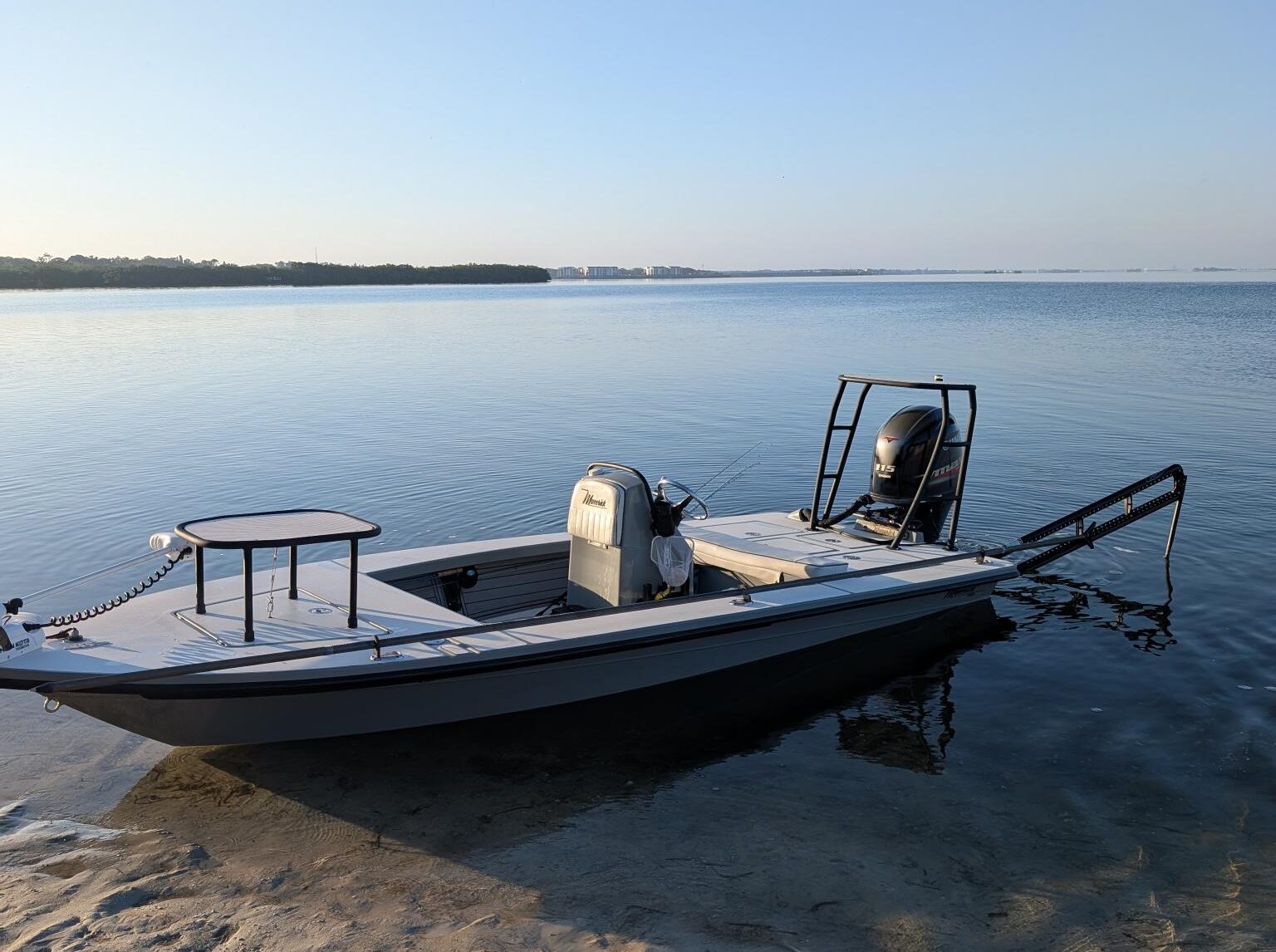
Also, in terms of the pressure wave that I mentioned earlier, there are brands like Chittum Skiffs, Hell’s Bay and Maverick as well as a few others that are engineered with hulls that greatly reduce that hull pressure wave. So, simply put, some poling skiffs are just stealthier than others by design (not an excuse for poor poling however).
In Sum
I am not exactly Steve Huff, but these are just my observations from fishing with a lot of guys who are exceptional anglers and really know how to pole a skiff. Me, I’m average, but I do understand the few items that I mentioned above. Commit these tips to memory and it may just help you catch a few more fish.
If you enjoyed this piece, then perhaps you’d also enjoy reading some of my other blogs as well. You can read my most recent piece here.
Until next time, tight lines.